 Astrool
House Systems
The different methods astrologers use to divide the chart into twelve houses, and why your planets can change house when you switch.
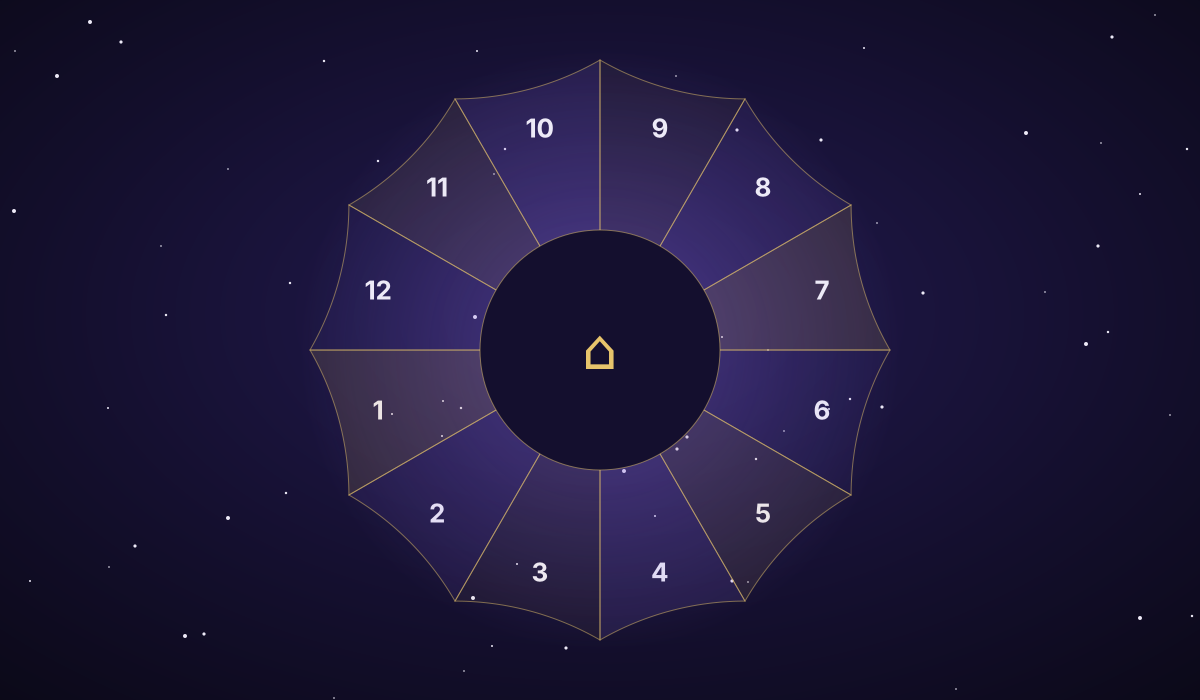
Why there are several
Dividing the three-dimensional sky into twelve sections can be done several ways. All systems agree on the Ascendant; most quadrant systems also put the Midheaven on the 10th cusp. They differ in how they space the houses in between.
Systems in Astrool
| System | How it works |
|---|---|
| Placidus | Time-based trisection of each quadrant; the modern Western default |
| Koch | Birthplace-based time division; popular in Germany |
| Topocentric | Close to Placidus, from a surface-of-Earth perspective |
| Porphyry | Each quadrant split into three equal parts |
| Meridian (Axial) | Equal divisions of the equator from the meridian |
| Equal | Twelve 30° houses from the Ascendant |
| Vehlow Equal | Equal houses with the Ascendant in the middle of the 1st |
| Whole Sign | Each sign is one house, starting with the rising sign |
Quadrant systems distort at high latitudes, where whole-sign and equal houses stay stable. Vedic astrology uses whole-sign houses.
See it in your own chart
Astrool calculates your full birth chart, not just your sun sign, and writes your daily, weekly and monthly readings against it.
Common questions
Which house system is best?
There is no consensus. Placidus is the Western default; Whole Sign is ancient and used in Vedic astrology. Try both and see which describes you.
Why did a planet change house when I changed system?
Systems place cusps differently, so planets near a cusp may shift.