 Astrool
Birth Chart Compare (Synastry)
Two full charts side by side: where the chemistry comes from, where the friction lives, and what the relationship looks like as a chart of its own.
What synastry is
Synastry is the astrology of relationships. Instead of asking whether two Sun signs get along, it lays one person's complete birth chart over the other's and measures every angle between their planets. Your Venus touching their Mars, your Moon opposite their Saturn: each contact describes one thread of how the two of you affect each other.
What you'll discover
- Scores from 0 to 100 for attraction, emotional bond, communication, long-term potential, growth together and friction
- Every aspect between your planets and theirs, strongest first, with the orb
- House overlays: which areas of your life their planets land in, and vice versa
- The composite chart: the relationship itself as a third chart
- Guna Milan, the traditional Vedic match out of 36 points across eight kootas
How each score is built
| Area | Calculated from |
|---|---|
| Attraction | Venus and Mars contacts, plus links to the Sun, Ascendant and Pluto |
| Emotional bond | How one person's Moon connects with the other's planets |
| Communication | Mercury contacts in both directions |
| Long-term potential | Saturn and North Node contacts |
| Growth together | Jupiter contacts |
| Friction | Squares and oppositions from Mars, Saturn, Uranus and Pluto |
Friction is the only score where a higher number means more tension. A little of it keeps a relationship alive; a lot of it calls for patience and honest talk. Overall harmony averages the five positive areas and is lowered slightly when friction is high. The same pair always gets the same result.
Reading the bi-wheel
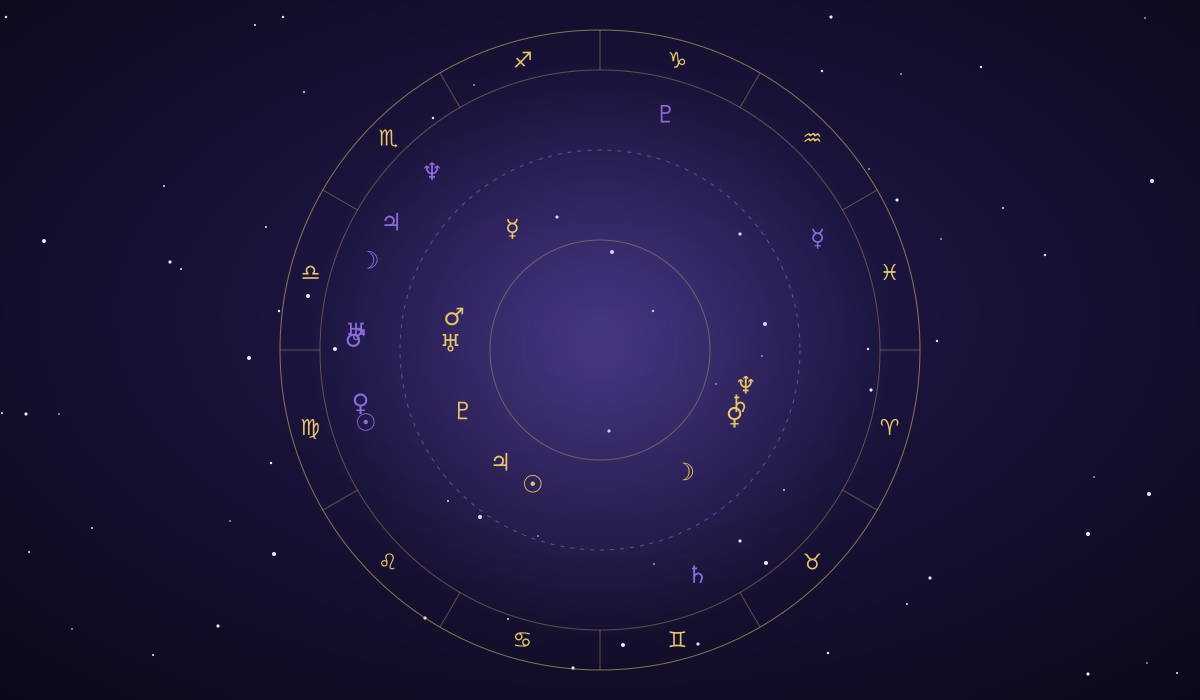
The report draws both charts on one wheel: the inner ring is the first person, the outer ring the second. Lines across the centre are the strongest aspects. Trines and sextiles flow easily, squares and oppositions create pull, and conjunctions fuse two energies for better or worse.
Western synastry and Vedic matching in one report
Indian families have matched charts for centuries with Ashtakoota Guna Milan, which compares the two Moons' nakshatras across eight areas worth 36 points in total. Below 18 is traditionally considered to need care, 18 to 24 is workable, 25 to 32 is very good, and above 32 is excellent. Astrool shows the koota breakdown and each person's Manglik status next to the Western analysis.
Compare yourself, or two other people
Choose Me and someone to compare your saved chart with a partner, friend or family member, or Two other people to compare any pair. Their birth time makes houses and rising sign possible; you can leave it out and still get planet-to-planet aspects and Guna Milan.
Open this report in Astrool
Astrool calculates your full birth chart, not just your sun sign, and writes your daily, weekly and monthly readings against it.
Common questions
What is the difference between synastry and compatibility?
Astrool's quick compatibility reading compares sun signs and key placements. Birth Chart Compare is the full synastry report: every aspect, house overlays, the composite chart and Guna Milan.
Do I need my partner's birth time?
It helps but isn't required. Without it the report leaves out their houses and rising sign and uses the planets alone.
What is a good Guna Milan score?
Out of 36, 18 or more is traditionally acceptable, above 24 is good and above 32 is excellent.
What is a composite chart?
A single chart built from the midpoints of each pair of planets in the two charts. It describes the relationship itself as a third entity: its purpose, mood and challenges.
Can I compare two friends or family members?
Yes. Choose Two other people and enter both sets of birth details.