 Astrool
Today's Panchang
The Vedic almanac for your city: the five limbs of the day, the times to avoid starting something new, and the most auspicious window, with every term explained.
What a Panchang is
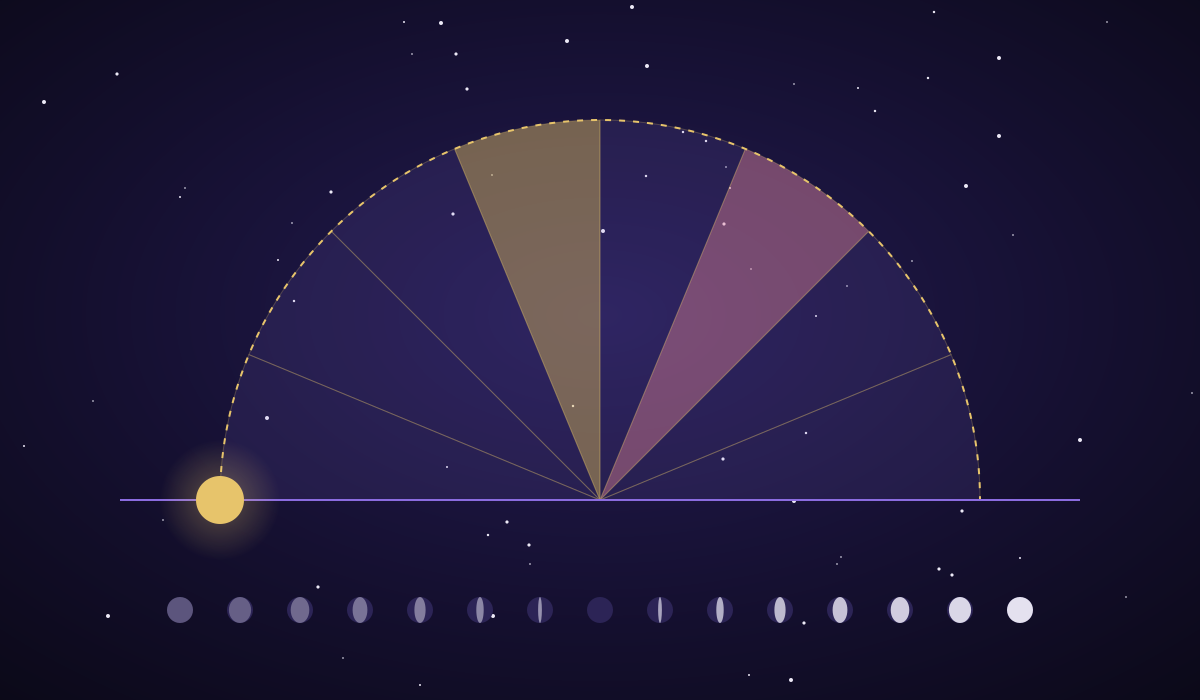
Panchang (Sanskrit pañcāṅga, "five limbs") is the traditional Hindu almanac. For any day and place it gives five measurements of time based on the Sun and Moon, and a set of daily windows used to choose good moments for weddings, journeys, purchases, ceremonies and new beginnings. Because it depends on local sunrise, the Panchang for Delhi is not the Panchang for London.
The five limbs
| Limb | What it measures |
|---|---|
| Tithi | Lunar day: each 12° the Moon moves away from the Sun; 30 per lunar month |
| Vara | Weekday, each ruled by a planet that sets the day's mood |
| Nakshatra | The lunar mansion the Moon is passing through; 27 in all |
| Yoga | From the combined longitudes of Sun and Moon; 27 in all |
| Karana | Half a tithi; 11 types that rotate through the month |
Daily time windows
| Window | Meaning |
|---|---|
| Rahu Kaal | One eighth of daylight, different each weekday. Avoid starting new work, purchases or journeys; continuing is fine. |
| Yamaganda | Another eighth of daylight, considered poor for important or long-term beginnings. |
| Gulika | Saturn's period: whatever begins tends to repeat, so use it only for things you want to continue. |
| Abhijit muhurta | About 48 minutes around local noon, the most favourable window of the day. Traditionally not observed on Wednesday. |
What you get in Astrool
- All five limbs for today, yesterday and tomorrow, with start and end times
- Sunrise and sunset for your exact location or any city
- Rahu Kaal, Yamaganda, Gulika and Abhijit, with overlaps flagged
- A tap-to-explain note on every term, including the tithi group (Nanda, Bhadra, Jaya, Rikta, Purna) and the nature of the nakshatra
- An optional reminder 15 minutes before Rahu Kaal begins
Shukla and Krishna paksha
The 30 tithis split into two fortnights, or paksha. Shukla paksha is the waxing half, from new Moon (Amavasya) to full Moon (Purnima), traditionally preferred for growth and beginnings. Krishna paksha is the waning half, better suited to completion, release and inner work.
Open this report in Astrool
Astrool calculates your full birth chart, not just your sun sign, and writes your daily, weekly and monthly readings against it.
Common questions
Why does the Panchang change by city?
Every limb and window is anchored to local sunrise and sunset, which differ by latitude and longitude.
Can I still finish work during Rahu Kaal?
Yes. Tradition advises against starting new things in Rahu Kaal; carrying on with what you already began is fine.
What is the most auspicious time of the day?
Abhijit muhurta, about 48 minutes around local noon, except on Wednesdays. If it overlaps Rahu Kaal, use only the part outside it.
Is the Panchang the same as a Hindu calendar?
The Panchang is the daily core of the Hindu calendar. Festivals and fasts are set from its tithis and nakshatras.