 Astrool
Transit
The planets keep moving after you are born. A transit is where one is now, and the angle it makes to a point in your birth chart.
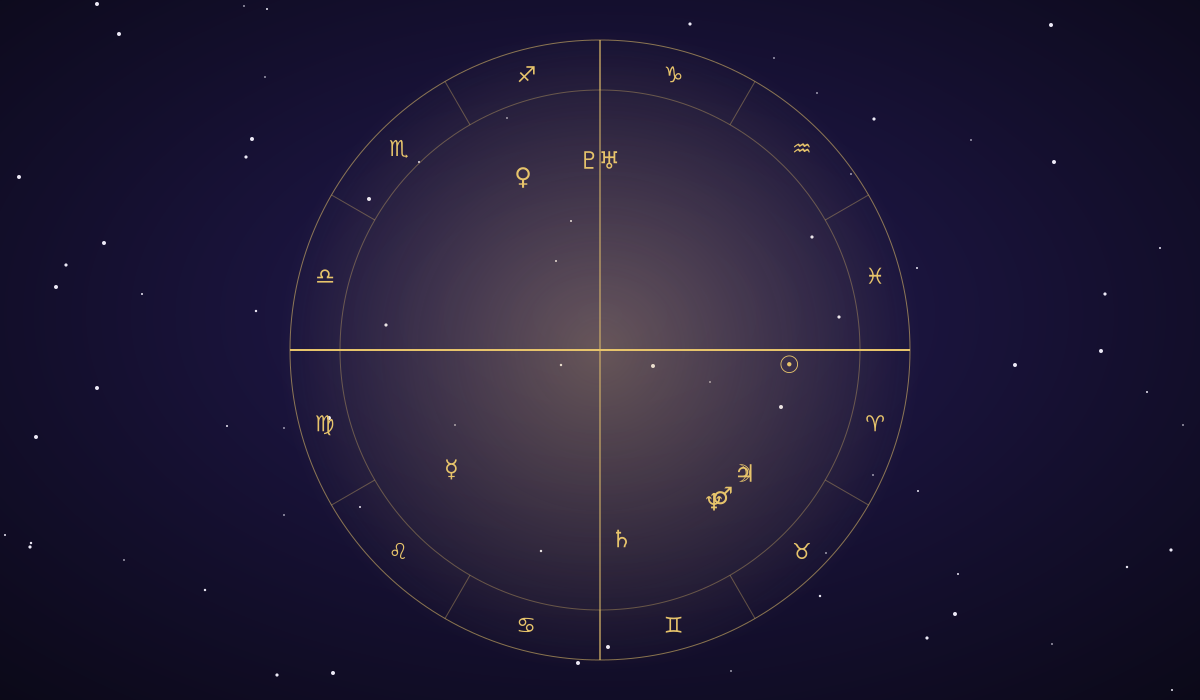
Definition
Your natal chart is frozen at birth. The sky is not. A transit describes a moving planet forming an aspect to a natal planet or angle, or passing through one of your houses. "Saturn transiting your Sun" means Saturn today is making an aspect to where your Sun was at birth.
Which transits matter
Speed sets significance. The Moon changes sign every two to three days and colours moods. Jupiter takes about a year per sign and opens opportunities. Saturn, Uranus, Neptune and Pluto move slowly enough that their transits shape whole chapters of life, such as the Saturn return.
Transits in Astrool
Your daily, weekly and monthly horoscopes are written from transits to your chart, cosmic weather shows them live, and rectification uses past transits to find a lost birth time.
See it in your own chart
Astrool calculates your full birth chart, not just your sun sign, and writes your daily, weekly and monthly readings against it.
Common questions
What is the difference between a transit and a progression?
A transit is the real planet's position today. A progression is a symbolic timing method; see secondary progressions.
How long does a transit last?
From hours for the Moon to two or three years for Pluto, including retrograde passes.